NOT ANY YEAST OR HONEY / LEVITICUS 2:11

START YOUR DAY RIGHT DAILY DEVOTION
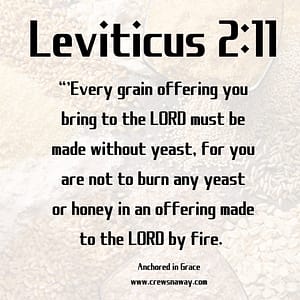
(KJV) Leviticus 2:11

 No meat offering, which ye shall bring unto the Lord, shall be made with leaven: for ye shall burn no leaven, nor any honey, in any offering of the Lord made by fire.

The Forbidden Sweetness: Why God Said “No” to Yeast and Honey

When we read through the Old Testament sacrificial laws, some instructions can feel like ancient dietary quirks. In Leviticus 2:11, God gives a specific command regarding grain offerings:

“No grain offering which you bring to the Lord shall be made with leaven, for you shall burn no leaven nor any honey in any offering to the Lord made by fire.”

At first glance, yeast (leaven) and honey sound like great additions. Yeast makes bread fluffy and comforting; honey makes it sweet and desirable. Yet, God strictly bans them from the altar. Why?

The answer lies in what these two ingredients do: they drive the fermentation process.

The Symbolism of Fermentation

Fermentation is fundamentally a process of change, breaking down, and decay. When yeast or honey are introduced into a dough, they don’t just sit there—they manipulate it. They inflate it, alter its chemical structure, and ultimately accelerate its decomposition.

Throughout Scripture, this process is frequently used as a vivid symbol for sin, pride, and moral corruption.

  • Leaven expands and puffs up: Just as a tiny pinch of yeast spreads through an entire lump of dough, sin and compromise quickly take over a human heart. Jesus warned His disciples to “watch out and beware of the leaven of the Pharisees” (Mark 8:15), referring to their hypocrisy and pride.
  • Honey masks reality with artificial sweetness: While honey is naturally sweet, in the context of fermentation, it acts as an agent of decay. It represents the temporary, deceptive sweetness of worldly pleasures—things that taste good for a moment but ultimately lead to internal rot.

Pure Offerings, Unchanging Devotion

By forbidding yeast and honey, God was teaching His people a profound truth about worship: He desires purity, transparency, and consistency.

The offerings brought to the altar were meant to be preserved, not corrupted. Salt, which preserves and prevents decay, was required in the very same chapter (Leviticus 2:13). God didn’t want an offering that was “puffed up” by yeast to look bigger than it actually was. He didn’t want an offering masked by the fleeting sweetness of honey. He wanted it pure.

When we present our lives as living sacrifices to God today, the call remains the same. God doesn’t look for an impressive, puffed-up presentation built on pride. He doesn’t want us to cover our rough edges with a fake, sugary exterior. He desires a heart that is raw, honest, holy, and completely untouched by the decaying influences of the world.

A Closing Prayer

Heavenly Father,

Thank You for the timeless wisdom of Your Word. Even in the ancient laws of the altar, You show us the beauty of a pure and holy life. Lord, we ask that You search our hearts today. Purge us of any “leaven”—any hidden pride, hypocrisy, or compromise that seeks to puff us up or corrupt our walk with You. Deliver us from the deceptive sweetness of worldly temptations that lead to spiritual decay.

Instead, fill us with Your truth. Help us to offer our lives daily as pure, unchanging sacrifices that are pleasing in Your sight. Guard our hearts, preserve our testimonies, and let our worship be authentic and holy.

In Jesus’ name, Amen.

Affiliate Disclosure: This post contains affiliate links. If you make a purchase through these links, I may earn a small commission at no extra cost to you.

Bible Study Tools I Use

Some of our Post That Might Interest You, All Out of the Current Book / Chapter

  1. GRAIN OFFERING / LEVITICU 2:1-2
  2. AROMA PLEASING TO THE LORD / LEVITICUS 1:9
  3. SLAUGHTER THE YOUNG BULL / LEVITICUS 1:5
  4. LAY HIS HAND ON / LEVITICUS 1:4
  5. BURNT OFFERING / LEVITICUS 1:3
  6. BRINGS AN OFFERING / LEVITICUS 1:2
  7. CREWS N AWAY: ANCHORED IN GRACE

Thanks for stopping by the blog today! I love having you here. If this post resonated with you, please drop a comment below and share your thoughts. See you in the next post!

Blessings, Margarita & Stace
GRAIN OFFERING / LEVITICU 2:1-2

START YOUR DAY RIGHT DAILY DEVOTION

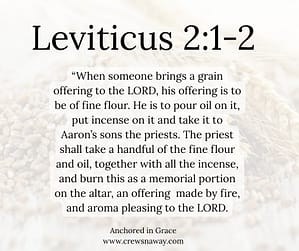
(KJV) Leviticus 2:1-2

And when any will offer a meat offering unto the Lord, his offering shall be of fine flour; and he shall pour oil upon it, and put frankincense thereon: 2 And he shall bring it to Aaron’s sons the priests: and he shall take thereout his handful of the flour thereof, and of the oil thereof, with all the frankincense thereof; and the priest shall burn the memorial of it upon the altar, to be an offering made by fire, of a sweet savour unto the Lord:

Worship Through the Daily Grind: Finding Purpose in the Grain Offering

When we open the book of Leviticus, it is easy to get lost in the ancient blueprints of altars, rituals, and sacrifices. We often view these chapters as historical artifacts rather than living words meant to shape our daily lives. However, if we slow down and look closer at Leviticus 2:1-2, we find a deeply practical truth about how God views our everyday labor.

The passage reads:

“When anyone brings a grain offering as an offering to the Lord, his offering shall be of fine flour. He shall pour oil on it and put frankincense on it and bring it to Aaron’s sons the priests. And he shall take from it a handful of the fine flour and oil, with all of its frankincense, and the priest shall burn this as its memorial portion on the altar, a food offering with a pleasing aroma to the Lord.”

Unlike other sacrifices that required animal blood, the grain offering was an offering born from human sweat, cultivation, and soil. It was a beautiful gift presented to God as an intentional act of worship, full of meaning for the ancient Israelite—and carrying powerful timeless truths for us today.

1. Your Work is a Sacred Gift

The grain offering symbolized that a person’s work was entirely dedicated to God. Grain didn’t just fall from the sky; it required planting, watering, harvesting, threshing, and grinding into fine flour. It represented the hours spent under the hot sun, the muscle ache of hard labor, and the skills of human hands.

By bringing the fruit of their labor to the altar, the worshiper was saying, “Lord, my ability to work, create, and earn comes entirely from You. I dedicate the daily grind back to You.”

This implies that all human work should be seen as an opportunity to honor the Lord. Your job—whether you sit at a corporate desk, care for children at home, build houses, or study for exams—is not separate from your spiritual life. Work is a primary avenue where we actively worship God. As the Apostle Paul famously echoes in the New Testament:

  • “So, whether you eat or drink, or whatever you do, do all to the glory of God.” (1 Corinthians 10:31)
  • “Whatever you do, work heartily, as for the Lord and not for men…” (Colossians 3:23)

2. An Expression of Daily Thanksgiving

The grain offering also served as a profound expression of thankfulness to God for one’s daily food. When a portion of that fine flour was burned on the altar, it went up as a “pleasing aroma to the Lord.” It was a tactile reminder that even though human hands baked the bread, it was God who ultimately provided the rain, the soil, and the breath of life necessary to sustain them.

When we transition our mindset from viewing work as a mere chore to viewing it as a vehicle for gratitude, everything changes. We stop rushing through the week just to get to the weekend. Instead, we begin to pause and thank God for the employment, the capability, and the daily bread He faithfully puts on our tables.

Bringing Your “Grain” to the Lord Today

You don’t need a handful of fine flour or frankincense to please God tomorrow morning. Christ has fulfilled the sacrificial system on our behalf, becoming the ultimate, pure offering pleasing to the Father.

Instead, you bring your grain offering by logging into your computer with integrity, treating a difficult customer with kindness, completing a project with excellence, and holding a heart of deep gratitude through it all. Let your work today be a sweet-smelling aroma to the Lord.

A Closing Prayer

Heavenly Father,

Thank You for the gift of this day and the strength to live it. We recognize that every ability we have to think, create, build, and labor comes directly from Your hand. Forgive us for the times we have looked at our daily responsibilities as a burden rather than a platform to praise You.

We lift up the work of our hands to You today. May our diligence, our attitude, and our interactions with others be a living grain offering—holy, pure, and dedicated to Your honor. We thank You deeply for Your faithful provision of our daily food, shelter, and grace. Let our lives be a pleasing aroma to You in everything we do.

In Jesus’ name, Amen.

Affiliate Disclosure: This post contains affiliate links. If you make a purchase through these links, I may earn a small commission at no extra cost to you.

Bible Study Tools I Use

Some of our Post That Might Interest You, All Out of the Current Book / Chapter

  1. AROMA PLEASING TO THE LORD / LEVITICUS 1:9
  2. SLAUGHTER THE YOUNG BULL / LEVITICUS 1:5
  3. LAY HIS HAND ON / LEVITICUS 1:4
  4. BURNT OFFERING / LEVITICUS 1:3
  5. BRINGS AN OFFERING / LEVITICUS 1:2
  6. CREWS N AWAY: ANCHORED IN GRACE

Thanks for stopping by the blog today! I love having you here. If this post resonated with you, please drop a comment below and share your thoughts. See you in the next post!

Blessings, Margarita & Stace
AROMA PLEASING TO THE LORD / LEVITICUS 1:9

START YOUR DAY RIGHT DAILY DEVOTION

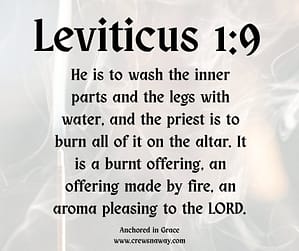
(KJV) Leviticus 1:9

But his inwards and his legs shall he wash in water: and the priest shall burn all on the altar, to be a burnt sacrifice, an offering made by fire, of a sweet savour unto the Lord.

The Sweet Aroma of Surrender: Living a Life Pleasing to God

Have you ever walked into a room filled with the scent of freshly baked bread or the clean fragrance of spring flowers? A simple aroma has the power to change an atmosphere, bring comfort, and invite us in.

In the Old Testament, God speaks frequently about aroma. Leviticus 1:9 describes a burnt offering made from the herd: “The priest shall burn all of it on the altar. It is a burnt offering, a food offering, an aroma pleasing to the Lord.”

To modern ears, the description of a burning animal sacrifice as a “pleasing aroma” might sound strange. But God wasn’t focused on the smoke or the physical scent. God was pleased with a person who offered a sacrifice in humble, obedient faith. The true fragrance rising to heaven was the heart of the worshiper—a heart fully surrendered, acknowledging God’s holiness and their own need for grace.

The Ultimate Aroma: Christ’s Sacrifice

In the New Testament, this Old Testament imagery finds its ultimate fulfillment in Jesus Christ. The Apostle Paul beautifully connects the two eras in Ephesians 5:2, walking us through how Jesus “loved us and gave himself up for us as a fragrant offering and sacrifice to God.”

Where our own righteousness falls short, Jesus offered a life of flawless obedience and a sacrifice of total surrender. His death on the cross was the perfect, ultimate “pleasing aroma” that satisfied the Father and covered our sins forever. Because of Him, the smoke of the altar has been replaced by the finished work of grace.

Becoming a Fragrance in the World Today

The beautiful truth of the gospel is that the story doesn’t end with Christ’s sacrifice. Because His Spirit lives within us, our lives are now called to carry that same heavenly fragrance into a broken world. Paul uses this same word picture to describe the daily lives of believers in two distinct ways:

  • Our Generosity and Care for Others: In Philippians 4:18, Paul thanks the church for their financial support and gifts, calling them “a fragrant offering, an acceptable sacrifice, pleasing to God.” When we give generously to those in need, God smells a sweet aroma.
  • Our Good Deeds and Praise: Hebrews 13:16 reminds us, “Do not neglect to do good and to share what you have, for such sacrifices are pleasing to God.”

Every time you choose kindness over retaliation, every time you share your resources with someone struggling, and every time you offer praise in the middle of a storm, you are lifting up a pleasing aroma to the Lord. It is not about earning our salvation, but about living out our faith in humble, obedient love.

Closing Prayer

Heavenly Father,

Thank You for the ultimate, perfect sacrifice of Your Son, Jesus Christ, whose love and obedience became the ultimate fragrant offering on our behalf. We confess that we often try to offer You empty words instead of a surrendered heart.

Forgive us, Lord, and shift our focus to what truly pleases You: a humble, obedient faith. Holy Spirit, guide our steps today. Let our words, our generosity, our quiet acts of kindness, and our praise be a sweet, pleasing aroma that rises to Your throne. May our lives reflect Your love to everyone we meet. In Jesus’ name, Amen.

Affiliate Disclosure: This post contains affiliate links. If you make a purchase through these links, I may earn a small commission at no extra cost to you.

Bible Study Tools I Use

Some of our Post That Might Interest You, All Out of the Current Book / Chapter

  1. SLAUGHTER THE YOUNG BULL / LEVITICUS 1:5
  2. LAY HIS HAND ON / LEVITICUS 1:4
  3. BURNT OFFERING / LEVITICUS 1:3
  4. BRINGS AN OFFERING / LEVITICUS 1:2
  5. CREWS N AWAY: ANCHORED IN GRACE

Thanks for stopping by the blog today! I love having you here. If this post resonated with you, please drop a comment below and share your thoughts. See you in the next post!

Blessings, Margarita & Stace
SLAUGHTER THE YOUNG BULL / LEVITICUS 1:5

START YOUR DAY RIGHT DAILY DEVOTION

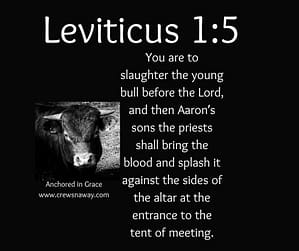
(KJV) Leviticus 1:5

And he shall kill the bullock before the Lord: and the priests, Aaron’s sons, shall bring the blood, and sprinkle the blood round about upon the altar that is by the door of the tabernacle of the congregation.

The Cost of Closeness: Understanding the Weight of Sacrifice in Leviticus 1:5

At first glance, the opening chapters of Leviticus can feel distant, clinical, and jarring to the modern reader. We encounter detailed instructions on anatomy, blood, and ritual procedures. In Leviticus 1:5, the text commands:

“You are to slaughter the young bull before the Lord, and then Aaron’s sons the priests shall bring the blood and splash it against the sides of the altar at the entrance to the tent of meeting.”

It is a heavy image: slaughtering a young bull. In ancient Israel, a young bull was an incredibly costly asset—a symbol of wealth, labor, and economic security. To bring it to the altar meant offering God one’s very best, recognizing that approaching a Holy God requires a serious, heavy acknowledgment of our own brokenness.

When we slow down and look past the ancient context, this verse reveals profound truths about grace, substitution, and the ultimate sacrifice made for us.

1. The Weight of Our Condition

In the ancient sacrificial system, the worshiper didn’t merely watch a ceremony from afar; they were actively involved. According to Leviticus 1:4, the person presenting the offering would lay their hand on the animal’s head, symbolically transferring their guilt before the animal was killed.

The raw reality of the slaughter served as a visceral reminder that sin isn’t trivial. It carries a heavy cost. The death of the young bull under the gaze of God demonstrated that holiness cannot simply overlook wrongdoing. Justice and love had to meet at the altar.

2. A Costly Substitution

A young bull was not a casual offering. It represented the peak of the worshiper’s livestock. Giving it up was an act of absolute surrender and trust. By offering something so valuable, the worshiper acknowledged that their relationship with God was worth more than their physical possessions or economic safety. The animal stood in their place, acting as a costly substitute so that the worshiper could find atonement and walk in close relationship with the Creator.

3. The Path to Ultimate Freedom

As believers today, we no longer bring bulls or livestock to an altar. Leviticus 1:5 points forward to a grander reality. The continuous splashing of blood at the tent of meeting anticipated a final, perfect sacrifice.

What the blood of bulls could only temporarily cover, the voluntary sacrifice of Jesus Christ completely washed away. He became our costly substitute. He bore the weight of our brokenness so that we could step directly into the presence of God—not with fear or guilt, but with confidence and grace.

When we read about the slaughter of the young bull, let it remind us of the immense depth of God’s holiness and the overwhelming scope of His love. We are deeply loved, completely forgiven, and invited to live out of the freedom that has already been bought for us.

Closing Prayer

Heavenly Father,

We stand in awe of Your holiness and Your perfect justice. Looking back at the old covenants, we see the gravity of what it means to approach You. We thank You that we no longer have to bring costly offerings to make amends, because You provided the ultimate, perfect sacrifice in Your Son, Jesus Christ.

Thank You for the grace that covers our shortcomings and the love that holds nothing back. Help us to live lives that reflect this incredible gift. May our daily actions, our thoughts, and our hearts be a living sacrifice, holy and pleasing to You. Fill us with Your peace and inspire us to share Your unconditional love with the world around us.

In Jesus’ name, we pray. Amen.

Affiliate Disclosure: This post contains affiliate links. If you make a purchase through these links, I may earn a small commission at no extra cost to you.

Bible Study Tools I Use

Some of our Post That Might Interest You, All Out of the Current Book / Chapter

  1. LAY HIS HAND ON / LEVITICUS 1:4
  2. BURNT OFFERING / LEVITICUS 1:3
  3. BRINGS AN OFFERING / LEVITICUS 1:2
  4. CREWS N AWAY: ANCHORED IN GRACE

Thanks for stopping by the blog today! I love having you here. If this post resonated with you, please drop a comment below and share your thoughts. See you in the next post!

Blessings, Margarita & Stace
LAY HIS HAND ON / LEVITICUS 1:4

START YOUR DAY RIGHT DAILY DEVOTION

(KJV) Leviticus 1:4

And he shall put his hand upon the head of the burnt offering; and it shall be accepted for him to make atonement for him.

The Weight of the Hand: Finding Our Identity in the Sacrifice

When an ancient Israelite walked up to the altar with a sacrificial animal, they did something profoundly personal: they leaned in and laid their hand heavily upon its head.

According to Leviticus 1:4, this act of laying on the hand (“LAY HIS HAND ON”) was not a casual touch. It was a physical demonstration of transfer and identification. By pressing down on the animal, the worshiper was declaring, “This life is now standing in place of my life. Its death is my death, and its acceptance before God is my acceptance.”

Through this physical act, the concept of substitution became a tangible reality. The animal took on the burden of the person’s flaws, allowing the worshiper to offer their life anew to serve God’s holy purposes.

From the Ancient Altar to the Cross

This powerful imagery from Leviticus serves as a vivid shadow of what Jesus Christ accomplished for us. The Old Testament worshiper leaned on a flawless animal; today, we place our faith and trust entirely upon the perfect Lamb of God.

When we entrust ourselves to Christ, we are deeply identifying with Him in two life-changing ways:

  • Identifying with His Death: Just as the animal died in place of the Israelite, Jesus died in our place. By laying our spiritual “hands” on Him through faith, our old, sinful way of life is crucified with Him (Romans 6:3-11). He became sin for us so that we might become the righteousness of God (2 Corinthians 5:21).
  • Identifying with His Resurrection: The story doesn’t end at the altar of death. Because Christ rose from the grave, we also walk in newness of life (Romans 8:10-11). We are empowered to leave our old lives behind and step into a living, breathing hope.

Our Response: Living Sacrifices

In ancient times, the animal’s life was ended on the altar. But because Jesus broke the power of death, our response is beautifully different. We no longer bring dead sacrifices; instead, we are called to present ourselves “as living sacrifices, holy and pleasing to God” (Romans 12:1).

Every day, we have the privilege of leaning into Jesus, trusting His substitution, and letting His life flow through ours.

A Closing Prayer

Heavenly Father,

Thank You for the beautiful and humbling truth of substitution. Thank You that I do not have to carry the heavy weight of my own sin, guilt, or failures. Just as the Israelites leaned into their sacrifices, I choose today to lay my faith completely upon Jesus Christ.

Thank You, Lord Jesus, for being my substitute. I identify with Your death, knowing my old self is crucified with You, and I claim the power of Your resurrection to walk in newness of life today. Wash me clean, and accept my life as a living sacrifice, holy and pleasing to You. May my choices, my words, and my heart serve Your beautiful purposes.

In Jesus’ mighty name, Amen.

Affiliate Disclosure: This post contains affiliate links. If you make a purchase through these links, I may earn a small commission at no extra cost to you.

Bible Study Tools I Use

Some of our Post That Might Interest You, All Out of the Current Book / Chapter

  1. BURNT OFFERING / LEVITICUS 1:3
  2. BRINGS AN OFFERING / LEVITICUS 1:2
  3. CREWS N AWAY: ANCHORED IN GRACE

Thanks for stopping by the blog today! I love having you here. If this post resonated with you, please drop a comment below and share your thoughts. See you in the next post!

Blessings, Margarita & Stace
BURNT OFFERING / LEVITICUS 1:3

START YOUR DAY RIGHT DAILY DEVOTION

(KJV) Leviticus 1:3

If his offering be a burnt sacrifice of the herd, let him offer a male without blemish: he shall offer it of his own voluntary will at the door of the tabernacle of the congregation before the Lord.

The Beauty of the Burnt Offering: Complete Surrender to God

When we read the opening chapters of Leviticus, the detailed descriptions of animal sacrifices can feel distant, ancient, and deeply foreign to our modern lives. Yet, nestled within these old rituals is a profound truth about what it means to truly worship God.

In Leviticus 1:3, God instructs His people on the burnt offering. The Hebrew term for this sacrifice literally means “that which goes up” to God. Unlike other offerings where a portion was kept or eaten, the entire burnt offering was consumed by fire on the altar. It was a vivid, physical representation of a heart-level reality: true worship involves complete surrender to God.

Cleansing Before Commitment

We cannot fully devote ourselves to God while holding onto the things that separate us from Him. In the ritual of the burnt offering, forgiveness was deeply involved (Leviticus 1:4). Before the worshiper could offer their gift as a token of total commitment, they had to be spiritually cleansed from sin.

This principle doesn’t change when we cross into the New Testament. Jesus echoed this heart posture in Matthew 5:23-24, reminding us that if we come to worship but hold unresolved conflict or unconfessed sin, we must first seek reconciliation. True surrender requires an honest inventory of our hearts.

The Ultimate Offering

The good news for us today is that we no longer need to bring animals to an altar. According to the writer of Hebrews, Jesus is the ultimate fulfillment of the burnt offering (Hebrews 10:5-10). He offered His body once and for all—not just as a partial token, but as a complete, flawless sacrifice.

Because Jesus surrendered everything for us, we are fully cleansed, fully forgiven, and fully free to lay our own lives down in worship. Our “burnt offering” today is a life completely yielded to His will.

A Closing Prayer

Heavenly Father,
Thank You for the ultimate sacrifice of Your Son, Jesus, who fulfilled the law and gave everything to cleanse us from our sins. Today, we want our lives to be an offering that “goes up” to You in sweet fragrance. We surrender our agendas, our fears, our control, and our desires. Holy Spirit, search our hearts and reveal any areas where we are holding back. Help us to live in total devotion and complete surrender to You every single day.
In Jesus’ name, Amen.

Affiliate Disclosure: This post contains affiliate links. If you make a purchase through these links, I may earn a small commission at no extra cost to you.

Bible Study Tools I Use

Some of our Post That Might Interest You, All Out of the Current Book / Chapter

  1. BRINGS AN OFFERING / LEVITICUS 1:2
  2. CREWS N AWAY: ANCHORED IN GRACE

Thanks for stopping by the blog today! I love having you here. If this post resonated with you, please drop a comment below and share your thoughts. See you in the next post!

Blessings, Margarita & Stace
BRINGS AN OFFERING / LEVITICUS 1:2

START YOUR DAY RIGHT DAILY DEVOTION

(KJV) Leviticus 1:2

Speak unto the children of Israel, and say unto them, If any man of you bring an offering unto the Lord, ye shall bring your offering of the cattle, even of the herd, and of the flock.

Drawing Near: What Leviticus Teaches Us About True Worship

When we think of the book of Leviticus, our minds often drift to complex rituals, detailed laws, and ancient practices that feel worlds away from our modern lives. But right at the very beginning, in Leviticus 1:2, we find a profound truth that changes how we view worship today.

The verse speaks of anyone who “brings an offering” to the Lord. In the original Hebrew, the word for offering is korban, which is deeply connected to a verb meaning “to draw near.”

An offering was never just a mechanical ritual or a duty to check off a list. It was a tangible gift brought by people who deeply desired to approach God, enjoy His fellowship, and receive His blessing. In a very real sense, these offerings were prayers in action.

The Purpose of the Offerings

Leviticus outlines five distinct offerings: the burnt offering, grain offering, fellowship offering, sin offering, and guilt offering. Worshipers presented these for several vital reasons:

  • To express heart-felt thanks and faith
  • To renew their relationship with God
  • To deepen their dedication to the Lord
  • To ask for forgiveness

Because humans are fundamentally broken and prone to self-dependence, these sacrifices served as a vivid reminder of God’s ultimate holiness. They taught Israel that sin carries a heavy cost, that atonement requires a substitute, and that God must direct every area of our lives. Yet, through it all, the ultimate message of Leviticus is beautiful: God fiercely desires to be gracious, to forgive, and to have a personal relationship with you.

Bringing Our Best to Him

For any offering to be acceptable to God, it required genuine repentance—a deep sorrow for wrong choices and a firm determination to turn toward Him. God did not just want the sacrifice; He wanted the heart.

Today, we no longer bring animal sacrifices because Jesus Christ became our ultimate substitute, paying our debt once and for all. However, we are still called to “draw near.” Our offerings today are our lives, our time, our praises, and our resources. When we approach Him with a sincere commitment to humility and righteousness, we experience the true joy of His presence.

A Closing Prayer

Heavenly Father,

Thank You that You are a holy God who fundamentally desires to be in a close, personal relationship with us. Thank You for Jesus, the ultimate sacrifice, who paid the debt of our sins so that we can freely approach Your throne.

Search our hearts today, Lord. Help us to turn away from self-dependence and any hidden attitudes that pull us away from You. We ask that You create in us a spirit of genuine repentance, humility, and faith. May our daily lives, our words, and our actions be a sweet-smelling offering that honors You. Draw us closer to Your presence today so that we may walk in Your perfect peace and fellowship.

In Jesus’ name, Amen.

Affiliate Disclosure: This post contains affiliate links. If you make a purchase through these links, I may earn a small commission at no extra cost to you.

Bible Study Tools I Use

Some of our Post That Might Interest You, All Out of the Current Book / Chapter

  1. CREWS N AWAY: ANCHORED IN GRACE

Thanks for stopping by the blog today! I love having you here. If this post resonated with you, please drop a comment below and share your thoughts. See you in the next post!

Blessings, Margarita & Stace